The Longest Night:
A Solstice Observance

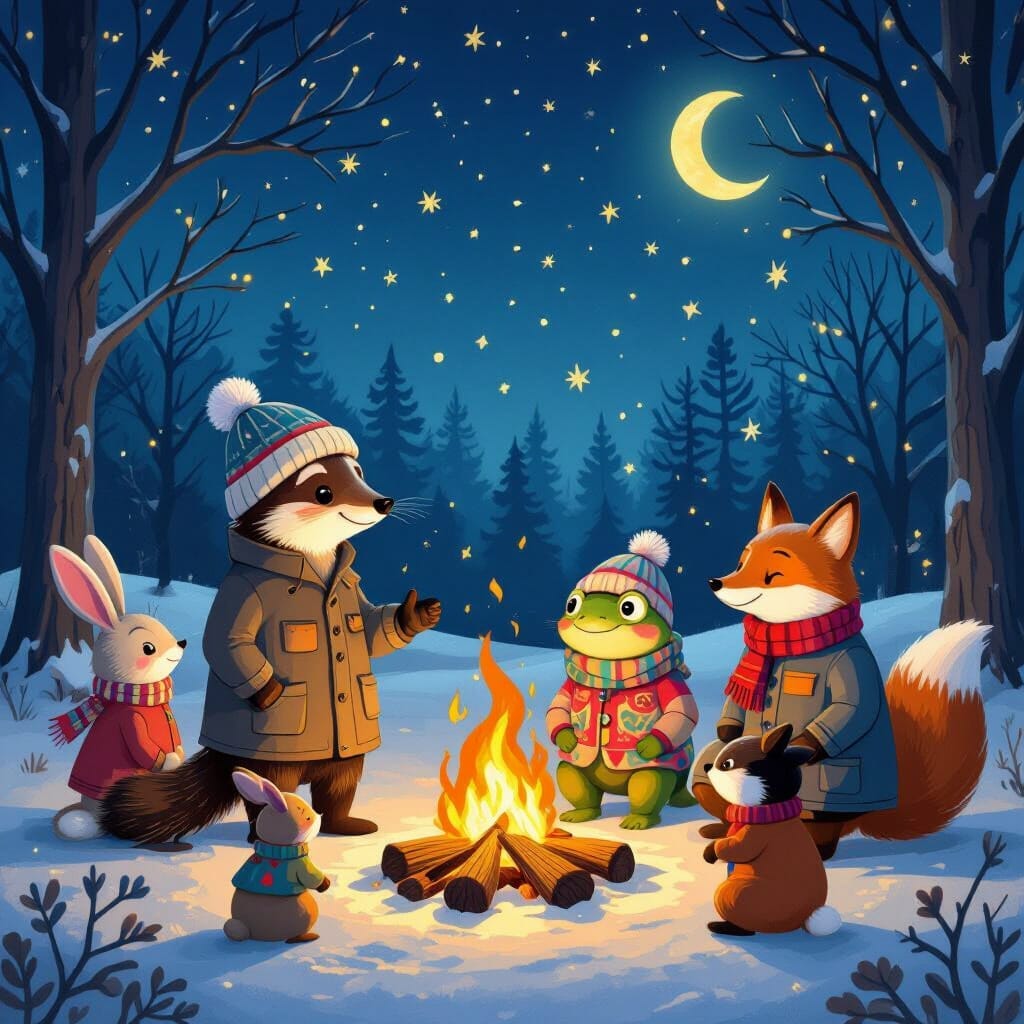
The sun sets early on December 21st in rural Utah, but then, it’s been setting early for weeks now. By the time I get home from my second shift in the windowless bunker where I monitor building systems for the Air Force, full dark has been down for hours. But tonight is different. Tonight is oidhche nan seachd suipearan - the night of the seven suppers - and Lady T has been preparing.
The Gaelic phrase sounds grand, almost mystical, but the practice is straightforward: on the longest night of the year, you mark the turning with abundance. Seven dishes if you can manage it (we always try), laid out to remind yourself that even in the depths of winter, even in the dark, there is plenty. There is care. There is the certain knowledge that the light comes back because it always has, because orbital mechanics don’t care about your politics or your theology or how hard the year has been.
The sun always comes back.
I remember my father taking us out on Christmas Eve when I was a boy, a Mormon family in rural Utah not so different from where I live now. We’d bundle up against the cold and Dad would lead us out to the barn, the chicken coop, the pasture. Special treats for everyone: apples for the horse, biscuits and mash for the cattle, oatmeal for the chickens. Even in the middle of our own holiday celebration, we paused to care for the animals that sustained us year-round.
Dad would have framed it as Christian charity, I think, or stewardship - those were the words we had then. But looking back, I recognize something older in the practice. Older than Christianity, older than any of the organized religions that tried to claim the winter solstice for their own. The acknowledgment that we share the dark and the turning with all the other living things. The covenant between humans and the creatures in our care. The simple recognition that if you’re going to celebrate abundance, you feed everyone.
The practice transcends the branding.
Lady T and I met in Christian-ish contexts - protestant youth activities, church socials, the whole cultural ecosystem that surrounded us. She just assumed, I think, that we shared the same basic worldview. We’d been together for years when a casual conversation with one of my nephews kind of outed me as atheist. She asked, with genuine curiosity rather than hurt, “What do you actually believe in?”
It led to an interesting riff as I tried to articulate something I’d been living but never quite named. I believe in taking care of each other. I believe in preparing and caretaking for the seven generations. I believe in systems that can be observed and tended. I believe in mutual aid and the long view and the evidence of my own eyes about what actually helps people flourish. I believe the sun comes back not because any god promises it, but because the orbital mechanics are sound and 4.5 billion years of planetary history suggest it’s a reliable pattern.
I’m a humanist, maybe, or at least atheist enough that I can’t quite commit to anything I can’t test and verify. But I like the philosophical underpinnings of Wicca better than most frameworks I’ve encountered - the attention to cycles, the honoring of both dark and light, the divine feminine that patriarchal Christianity tried so hard to erase. Buddhism has some good bits too. The practice of attention. The recognition of interconnection.
Mostly, though, I believe in doing the things that matter: feeding the animals, feeding each other, keeping the languages alive, tending the soil for the people who come after.
Lady T understood. She’d been seeing that belief in action all along. We’d already been observing the same holy days, just with different theological footnotes.
She told me once about working with a youth leader in one of those older Protestant churches - Episcopal maybe, or something similar. Catholic light. The van full of kids was getting ready to head to some conference, and as they prepared to leave, Lady T quietly prayed for safety and protection from “Mother God.”
Everyone got very still. You could see the kids trying to decide if that’s what she’d actually said. The self-important youth leader probably ran the phrase through his head a few times, trying to figure out if he should challenge it or call it out, wondering what the protocol even was for correcting someone’s theology mid-prayer.
But Lady T just finished up, perfectly composed, and the moment passed. Nobody asked. The social momentum carried them forward to their event, and the seed was planted.
She was a young teacher then, her boy maybe eight or ten, navigating church spaces as a single mother while also being fundamentally herself. Tami is one of those “don’t fence me in” people who’ll participate in institutions but always on her own terms. The kind of person who’ll deploy a quiet theological hand grenade and then act like nothing happened, cautiously watching to see if the guardians of orthodoxy tie themselves in knots.
No wonder we found each other.
Before our wedding party, Lady T and I walked the property with a sage smudge, smoking the boundaries, preparing the space. New age custom, borrowed from Indigenous practice, but I learned recently that the old Gaels did something similar with dried juniper branches. They called it saining - blessing, protecting. They’d smoke the rooms at New Year’s, drive out the old year’s bad luck, prepare for what comes next.
Different plants, different frameworks, same human instinct. Mark the threshold. Tend the boundary between what was and what will be. The smoke does practical work (insect repellent, antimicrobial) while also doing the symbolic work. Magic and chemistry, inseparable.
I’ve always had a yearning for the old ways, and I believe in my heart that some of those practices go back to the very earliest times, when people were just starting to be human. The making of fire - that was always big magic. Still is, really. Every hearth is a small sun. Every person who can make fire performs a miracle. When I learned to make friction fire with a bow drill and a wood hearth-board … well. Magic.
The words for mother, for father, for home and hearth - these echo across Indo-European languages because they were that fundamental when the languages split. Fire-making, bread-baking, the feeding of the clan. These aren’t quaint traditions we’ve outgrown. They’re encoded in the very fibers of what it means to be human.
Christmas Eve lasagna is part of our tradition now too, though it has the silliest origin story. I was working as an appliance repairman years ago, in somebody’s house around the holidays, and they were making lasagna. I asked about it - that seemed like an odd Christmas dish - and they explained it was their family custom.
I came home and said to Tami: “Babe, that’s a good custom. Because lasagna!” Also, it turns out that ground meat with haggis spices makes a very fine gaelic lasagna, indeed.
We’ve done it ever since.
That’s how tradition works, really. You take the good customs where you find them. Sometimes they’re ancient Gaelic practices preserved through language study. Sometimes they’re your father’s Christmas Eve rounds to feed the animals. Sometimes you’re fixing someone’s dishwasher and you see a practice that works - brings people together, tastes good, feels right - and you just take it. Make it yours. Pass it forward.
Oidhche nan seachd suipearan is metaphorical, of course, but we always try to have seven food items anyway. The lasagna, plus six others, all laid out on the longest night. Abundance as an act of defiance and faith. Not faith in any deity, but faith in the pattern. Faith in each other. Faith that we can create warmth and light and plenty even when - especially when - the dark seems longest.
Out in the Commune, our mutual aid network of a dozen households, people mark the season in their own ways. Different beliefs, different frameworks, but the same underlying recognition: this is the hinge point. The moment when we’ve descended as far into darkness as we’re going. Tomorrow, the light starts coming back. Slowly at first - imperceptibly - but reliably.
You can observe it. You can measure it. It’s the pressure gauges of the cosmos, if you will, showing the system working as it always has.
I monitor building systems for a living, watching for the failures before they become critical. It’s taught me to trust the patterns that repeat, to recognize what’s sustainable and what isn’t, to know the difference between a temporary fluctuation and a fundamental shift. The solstice is the most reliable pattern we have. The sun always comes back because it must, because that’s how orbital mechanics work, because 4.5 billion years of planetary history says so.
But we mark it anyway. We light the fires and prepare the feast and feed each other and the animals in our care. Not because the sun needs our rituals to return, but because we need the rituals. We need to gather in the dark and acknowledge it. We need to create light and warmth with our own hands. We need to practice the old magic of making fire and sharing food and caring for the seven generations.
The practice transcends the branding.
Tonight, Lady T and I will lay out our seven dishes. We’ll mark the longest night the way humans have always marked it: together, with full bellies and warm hearts, with the certain knowledge that tomorrow the light begins its return. We’ll tend our homestead and our mutual aid network and our small piece of the world the way my father tended his animals on Christmas Eve - with practical care that is itself a form of prayer, whether you frame it that way or not.
The sun will come back. It always does. And in the meantime, we have lasagna and each other and the deep human practice of making light in the darkness.
That’s enough. That’s everything.
Nollaig chridheil. Bliadhna mhath ùr.
Merry Christmas. Happy New Year.
Or if you prefer: Blessed solstice. May the light return.
It all means the same thing.
Looking forward to the practice. And another year together sharing hands and hearts.