Part TWO: Hogmanay, the distributed resistance
The traditions that survive are the ones too small to ban.

In her book Scatter, Adapt, and Remember, Annalee Newitz argues that survival - whether of species or civilizations - isn’t about building walls high enough to keep disaster out. It’s about distribution. Redundancy. The ability to persist in a thousand small places when the center cannot hold.
I think about this when I think about Hogmanay.
For three hundred years, the Kirk tried to stamp out the old celebrations. They banned Christmas. They preached against superstition. They sent ministers into parishes to root out the old ways, the popish ways, the ways that smelled of fire and ash and something older than the Reformation.
They failed.
Not because the Scots rose up in open rebellion - though there was some of that. Not because the traditions had powerful defenders in high places - they didn’t. The Kirk failed because you cannot ban what lives in kitchens.
You can forbid a public feast. You cannot stop a woman from cleaning her house on the last day of December. You can preach against superstition. You cannot monitor whether a farmer keeps his fire burning through the night. You can dictate what happens in the kirk on Sunday. You cannot control what happens at the threshold when the clock strikes midnight and a dark-haired stranger comes knocking with coal in his pocket.
The traditions survived because they were distributed. No central authority held them. No single institution could be pressured or co-opted or shut down. Hogmanay lived in ten thousand households, adapted to local conditions, remembered in local ways. In Stonehaven they swung fireballs. In Burghead they burned the Clavie. In the Highlands they sang in Gàidhlig; in the Lowlands they sang in Scots. The forms varied. The core persisted.
A Thousand Hearth Fires
This is how resilient systems work.
I learned this in my day job, actually. I monitor building systems for a living - HVAC, electrical, the invisible infrastructure that keeps structures habitable. And one thing you learn quickly is the difference between centralized and distributed failure modes.
A building with one massive boiler is efficient right up until that boiler fails. Then everything goes cold at once. A building with distributed heating - multiple smaller systems, redundant loops, zone controls - is less elegant on paper. But when something breaks, and something always breaks, the failure stays local. The rest of the system routes around the damage.
The Kirk was a single massive boiler. Hogmanay was a thousand hearth fires.
We’re watching centralized systems fail all around us right now. Institutions that looked permanent six years ago are creaking, hollowing out, revealing themselves as more brittle than anyone wanted to believe. And there’s a temptation to respond by trying to build bigger, stronger institutions. To fix the center. To shore up the walls.
Maybe. Sometimes that’s the right call.
But I find myself thinking more about hearth fires these days. About what can be practiced in kitchens, passed between neighbors, kept alive in ten thousand small places where no authority can reach. About the skills and traditions and mutual obligations that persist not because anyone commands them but because they’re woven into how people actually live.
I know a dozen households, spread across my little corner of Utah, who share tools and labor and food and childcare. We don’t have a name for it, mostly. Sometimes I call it the Commune, which makes my more conservative neighbors roll their eyes. But whatever you call it, it works the same way Hogmanay worked. Too small to ban. Too distributed to fail all at once. Adapted to local conditions. Remembered in local ways.
Refusing to Forget
The Kirk couldn’t kill Hogmanay because Hogmanay didn’t live in the kirk.
The traditions that survive are the ones that live in us.
The fire doesn’t care who’s in power. The fire only cares that someone tends it.
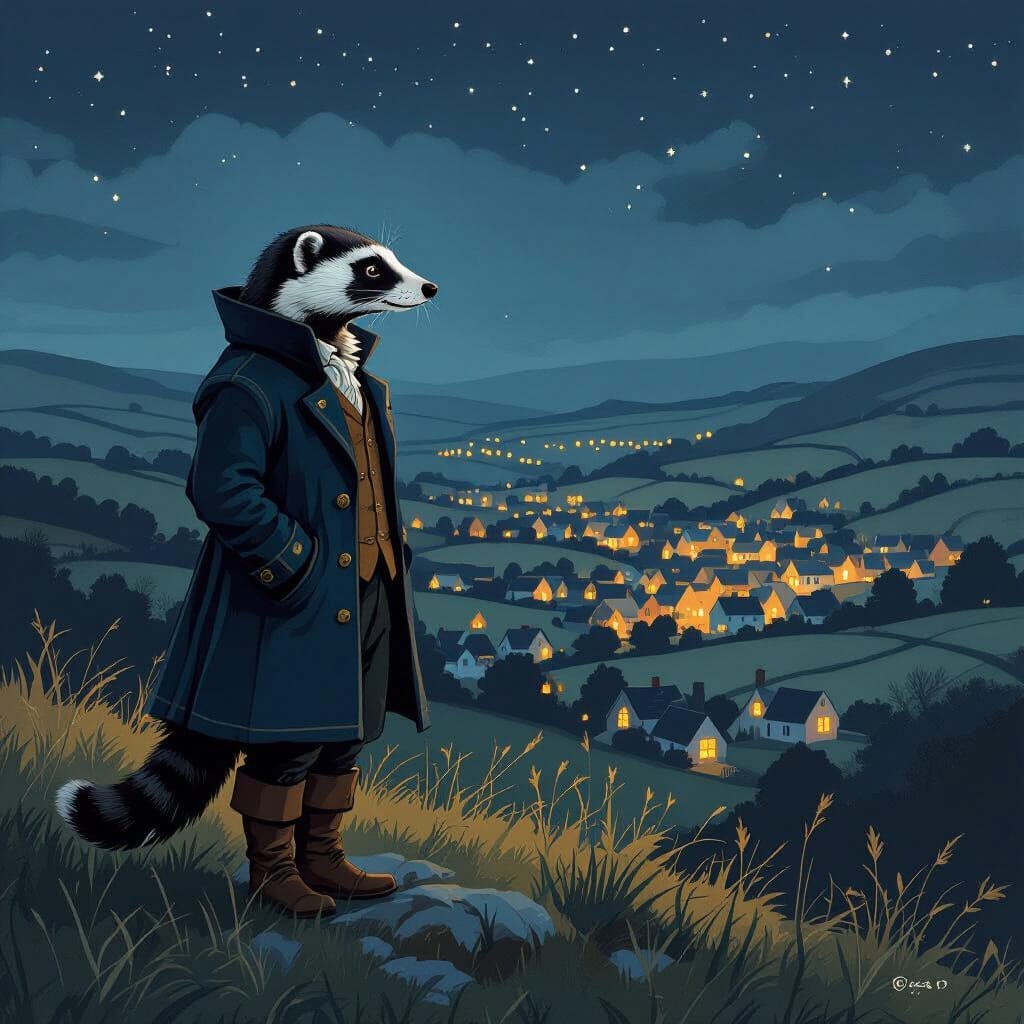
This is mongoose wisdom, really. The patient long game. You can’t fight every battle, can’t hold every wall, can’t save every institution that’s crumbling. But you can keep your own fire burning. You can learn the old skills and teach them to whoever’s willing to learn. You can scatter, adapt, and remember.
Three hundred years the Kirk tried to kill Hogmanay. Three hundred years the hearth fires kept burning.
That’s the distributed resistance. Not a revolution. Not a movement with leaders and manifestos. Just ten thousand households, doing quietly what they’d always done, refusing to forget.
The center may not hold. It often doesn’t.
But the hearth fires are still burning.
We'll hold the old ways, together.
Love this.